Seacoast Sips of Science x Saul O Sidore Memorial Lecture Series
Presented by The University of New Hampshire and The Music Hall
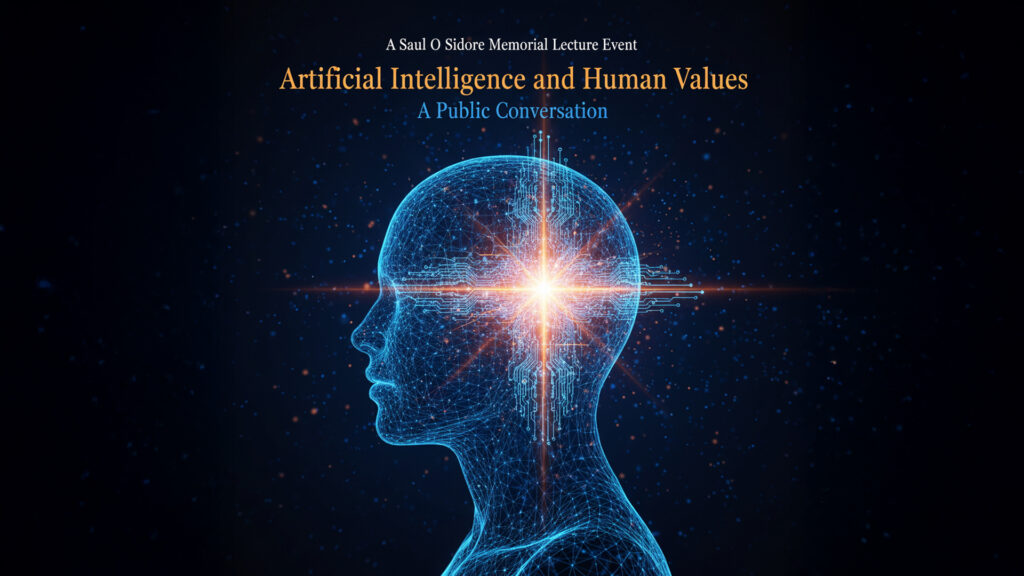
Artificial intelligence is no longer a distant or abstract possibility; it is already reshaping how we work, create, decide, and relate to one another. As AI systems grow more powerful and more deeply embedded in social life, a new set of questions demands our attention: What values should guide these technologies? Which human capacities should be preserved, transformed, or relinquished? And who gets to decide?
AI and Human Values brings together three distinguished and dynamic philosophers to explore these questions in a high-energy evening of ideas. Harvey Lederman (University of Texas at Austin), Henry Shevlin (University of Cambridge), and Beba Cibralic (RAND School of Public Policy) are leading voices in contemporary philosophy and AI ethics, known for combining conceptual rigor with real-world relevance. Their talks will approach AI from different angles, offering complementary perspectives on what is at stake as intelligent systems increasingly shape human life.
The evening will culminate in a live panel discussion moderated by Nir Eisikovits and James Hughes, co-hosts of the Prosthetic Gods podcast. The panel—recorded as a podcast episode—will invite direct engagement among the speakers and create space for lively exchange, disagreement, and clarification, giving the audience a rare window into philosophy in action.
Whether you are deeply invested in AI debates or simply wondering what these technologies mean for our shared future, this event offers a chance to think together—critically, imaginatively, and as part of a public conversation.
About the Speakers
 Harvey Lederman
Harvey Lederman is Professor of Philosophy at the University of Texas at Austin and Co-Principal Investigator of the AI and Human Objectives Initiative at the School of Civic Leadership. His work spans ancient Chinese philosophy, philosophical logic, epistemology, and philosophy of language, reflecting a longstanding interest in how conceptual frameworks shape human understanding. In recent years, he has turned his attention to artificial intelligence, exploring its implications for human self-conception, agency, and the nature of meaningful work. His research examines how emerging technologies challenge established philosophical accounts of reason, value, and human purpose.
 Henry Shevlin
Henry Shevlin is Associate Director of the Leverhulme Centre for the Future of Intelligence at the University of Cambridge. Trained in philosophy of mind and cognitive science, his research examines the conceptual foundations of intelligence and their ethical significance. His work on artificial intelligence investigates human–AI relationships, as well as the connections between consciousness, creativity, perception, and moral status. By bridging philosophy, cognitive science, and technology ethics, he contributes to ongoing debates about how advances in AI reshape our understanding of minds—both natural and artificial.
Beba Cibralic
Beba Cibralic is a philosopher and researcher at the RAND School of Public Policy and an Associate Fellow at the Leverhulme Centre for the Future of Intelligence at the University of Cambridge. Her work sits at the intersection of AI governance, ethics, and public policy. She previously served as Responsible AI Lead at JPMorgan Chase & Co., and has contributed to policy initiatives with the Center for Democracy and Technology and the Center for Security and Emerging Technology. Her research focuses on questions of agency, responsibility, and accountability in AI systems, with particular attention to institutional design and regulatory frameworks that promote safety and public trust.
 Nir Eisikovits
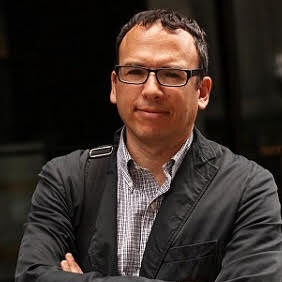
Nir Eisikovits is Professor of Philosophy and Founding Director of the Applied Ethics Center at UMass Boston. His scholarship addresses moral and political dilemmas arising from war, conflict, and the use of emerging technologies. In the context of artificial intelligence, his work examines the ethical risks of autonomous systems, the militarization of AI, and the broader political consequences of technological power. In addition to his academic research, he advises organizations working on conflict resolution and writes frequently for public audiences on political violence and the ethics of technology.

James Hughes
James Hughes is a bioethicist and sociologist who serves as Associate Provost for Institutional Research, Assessment, and Planning at UMass Boston and as Senior Research Fellow at its Applied Ethics Center. In 2005, he co-founded the Institute for Ethics and Emerging Technologies with philosopher Nick Bostrom and has since served as its Executive Director. His scholarship explores the social and political implications of transformative technologies, including artificial intelligence, human enhancement, and biotechnology. Through his academic leadership, editorial work, and public engagement, he advances debate about how democratic societies should govern emerging technologies in ways that promote justice, flourishing, and human dignity.
About the Saul O Sidore Memorial Lecture Series
THE SAUL O SIDORE MEMORIAL LECTURE SERIES WAS ESTABLISHED IN 1965 IN MEMORY OF SAUL O SIDORE OF MANCHESTER, NEW HAMPSHIRE. THE PURPOSE OF THE SERIES IS TO OFFER THE UNIVERSITY COMMUNITY AND THE STATE OF NEW HAMPSHIRE PROGRAMS THAT RAISE CRITICAL AND SOMETIMES CONTROVERSIAL ISSUES FACING OUR SOCIETY. THE UNIVERSITY OF NEW HAMPSHIRE CENTER FOR THE HUMANITIES SPONSORS THE PROGRAMS. LECTURES ARE FREE AND OPEN TO THE PUBLIC.
Partners